
What Are Those Black Streaks On Your Roof (And Do They Cause Damage?)
Word Count: 617 words | Read Time: 3 min(s)
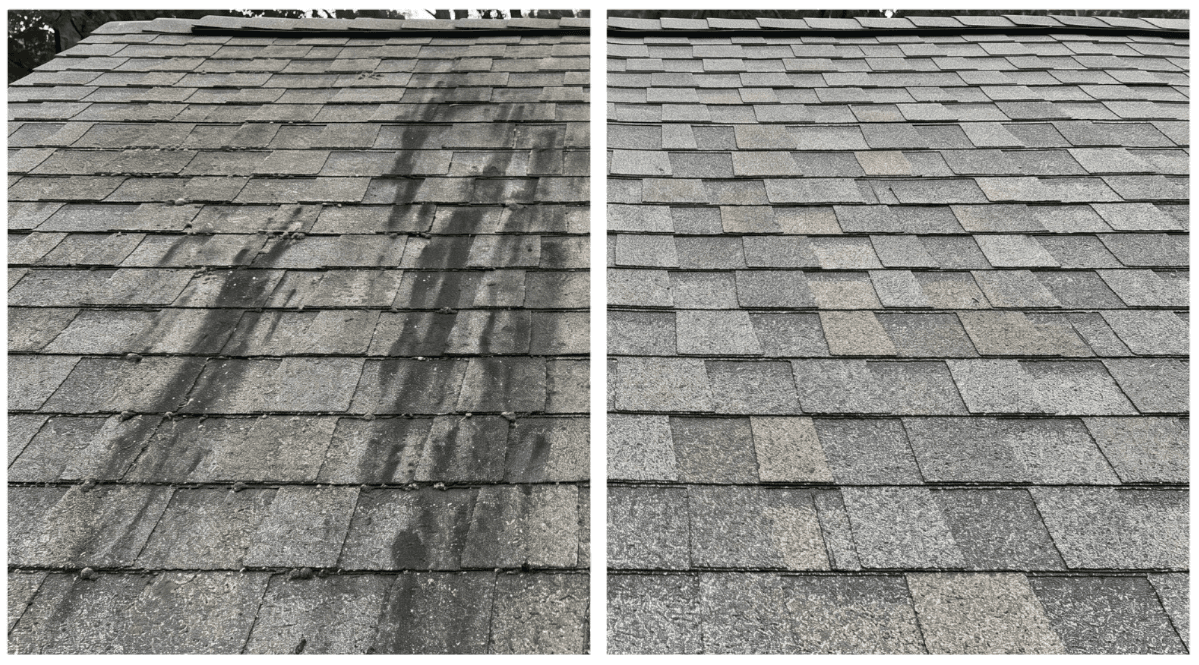
Take a look around almost any neighborhood in Central Ohio, and you will spot dark, discolored streaks running down south and west facing roofs. Most people assume it is soot from passing cars, chimney exhaust, or simple dirt kicked up by wind. Others worry their shingles are shedding granules and need full replacement.
The reality is biological. Those dark patches are caused by an airborne cyanobacteria called Gloeocapsa magma. Left untreated, it does more than ruin curb appeal. It shortens the lifespan of your roof, drives up cooling bills, and can even trigger insurance warnings.
Here is what every homeowner needs to know about what is growing on their shingles, how it spreads, and the proper way to eliminate it safely.
What Causes Black Streaks On Asphalt Shingles?
Asphalt shingles are manufactured with a base mat, an asphalt coating, and a surface layer of granules. To add weight, structural stability, and fire resistance, shingle manufacturers add powdered limestone (calcium carbonate) into the asphalt mix.
Gloeocapsa magma travels on the wind from tree canopies and neighboring rooftops. Once spores land on your roof, they anchor into the shingle surface and begin feeding on that limestone filler.
The bacteria produces a dark, hardened outer sheath to protect itself from ultraviolet radiation. As colonies expand and wash downward with rainwater, that dark protective sheath forms the familiar vertical black tiger stripes across roofs.
Why You Should Not Ignore Roof Bacteria
Many homeowners view roof discoloration as a minor cosmetic annoyance. However, allowing algae and moss to dwell on asphalt surfaces causes three distinct functional issues:
1. Accelerated Shingle Granule Loss
As bacteria colonies feed on the limestone matrix, they loosen the embedded ceramic granules designed to protect the shingle from sunlight. Once granules wash away into gutters, the underlying asphalt becomes brittle, leading to early cracking, curling, and shingle failure years ahead of schedule.
2. Higher Energy Bills
Asphalt shingles are designed to reflect a percentage of solar heat away from the attic. Black bacteria streaks absorb intense sunlight like a sponge. This thermal absorption transfers directly into your attic insulation, forcing HVAC systems to work harder during hot afternoons to keep living spaces cool.
3. Homeowner Insurance Ineligibility
Insurance underwriters regularly use aerial imaging and street photography during policy renewals. Roof surfaces displaying heavy organic streaks or moss colonies are frequently flagged as maintenance neglect. Carriers routinely issue remediation notices or cancel wind and hail endorsements until the roof is professionally cleared.
Why Pressure Washers Destroy Asphalt Shingles
When homeowners or inexperienced contractors attempt to clean a roof, the most common mistake is bringing a high pressure wand onto the roof deck.
High pressure water blasts the ceramic granules straight off the fiberglass mat, stripping away years of warranty protection in minutes. It can also drive pressurized water upward underneath shingle tabs, saturating underlayment and causing hidden attic rot.
The Asphalt Roofing Manufacturers Association (ARMA) explicitly recommends soft washing as the standard for cleaning asphalt shingles.
The Soft Wash Standard: Killing the Spore at the Source
Soft washing utilizes dedicated low-pressure delivery equipment (typically under 100 PSI) paired with targeted, biodegradable cleaning agents.
Rather than relying on mechanical force to scour surfaces, soft washing achieves results through chemistry:
- Eradicates the Root Organism: Algae is a living plant organism. Soft washing neutralizes the spores and root structures entirely, preventing quick regrowth.
- Preserves Factory Granules: Water is applied at garden hose pressures, meaning no granules are stripped and the manufacturer warranty remains protected.
- Longer Lasting Clean: Pressure washing merely shears off the visible surface layer while leaving spores embedded in shingle pores to return within months. Soft washing eliminates the bacteria completely, keeping roofs clean for three to five years.

